By Dr. William Ryan
Charles Town, 1775. The city is swept up in the furor surrounding what would become known as the American Revolutionary War. News of Lexington and Concord stuns city residents. George III declares the colonists to be in rebellion. A local newspaper reports that Parliament is planning to arm Blacks, Roman Catholics, Indians, and Canadians against the American colonists. Rumors of an impending British attack begin to swirl. For South Carolina patriots, the dread of the world’s most powerful navy arriving in Charleston Harbor looms large.
During the spring and summer of 1775, such fears were not entirely unfounded. As Charleston braced itself for invasion and grappled with the uncertain outcome of revolution, patriot leaders had to reckon with South Carolina’s Achilles heel: demography. For most of the eighteenth century, South Carolina’s enslaved Blacks outnumbered whites, especially in several Lowcountry parishes. What would happen if the British exploited this circumstance to their own benefit? Perhaps even more frightening for those spearheading the patriot movement, what would happen if the enslaved Black majority exploited this vulnerability as well?
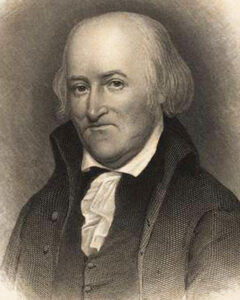
Indeed, none other than merchant, planter and patriot Christopher Gadsden described South Carolina as “a weak Colony” due to the vast numbers of enslaved Africans. Even the famed Samuel Johnson wondered why “the loudest yelps for liberty” seemed to come from “the drivers of the Negroes.” In 1775, the former royal governor of South Carolina, William Henry Lyttleton, gave a speech before the House of Commons in which he likened the thirteen colonies to a chain stretching up and down the eastern seaboard. The weakest part of the chain, Lyttleton argued, were the Southern colonies due to their proportion of enslaved inhabitants.
Enter Thomas Jeremiah. Thomas Jeremiah may be the most important Revolutionary figure you’ve never heard of. Boston may have its Crispus Attucks, but Charleston has Thomas Jeremiah. Arguably the first South Carolinian to die in the War for Independence, Jeremiah may have also been the wealthiest person of color on the eve of the American Revolution. Jerry, as he was sometimes called by contemporaries, was endowed with numerous gifts. A jack-of-all-trades, Jerry’s talents as a fisherman, firefighter, and harbor pilot garnered the attention of the entire community. Indeed, Jeremiah seemed to have numerous white and Black friends.
Despite Jeremiah’s wealth and popularity, this shadowy figure appears only sporadically in the historical record. In 1771, for example, he was found guilty of assaulting a white ship captain and was subsequently pardoned. The following year, the enterprising Jerry placed an advertisement in the South Carolina Gazette for an anchor that he had found near Gadsden’s Wharf. Jerry’s ad shrewdly stipulated that the anchor’s owner would have to pay salvage and the cost of the ad to have the property returned.
Jeremiah was an anomaly. As a free Black who enslaved other Blacks in his fishing business, Jeremiah eventually amassed a small fortune. How he obtained his freedom though is very much a mystery. It is clear, however, that through raw talent and determination, Jeremiah transcended the rigid eighteenth-century boundaries of race and class.
It is hard to overstate the importance of harbor pilots in Charleston at this time. In addition to enabling maritime commerce in what was colonial America’s wealthiest seaport, thanks to the import of enslaved Africans and the export of rice and indigo, pilots played a critical role in the security of Charleston Harbor and of the city more broadly. No one could get in or out of the harbor on a large ship without one, largely due to the prominent sandbar off the coast (first dredged in 1853) which proved to be a formidable obstacle for any sizable vessel arriving in Charleston.
There was perhaps a dozen of these harbor pilots in 1775, and Thomas Jeremiah was one of them. For a British invasion of Charleston to succeed, a willing pilot with local knowledge of the harbor was essential. This tactical reality even prompted the British to kidnap a Black pilot much to the dismay of patriot leaders. During this period, gunpowder was also a strategic necessity. Whoever controlled its supply held the reins. This was not lost on Charleston patriots who stealthily raided the local powder magazines in April of 1775 under the cover of night. Based on the sources, it appears that Jerry managed to acquire gunpowder himself or knew people who could get their hands on it. He was, therefore, uniquely positioned to lead a British-assisted slave insurrection.
If any of this seems far-fetched, we must remember that Thomas Jefferson stated in the Declaration of Independence that the King’s incitement of “domestic insurrections” was a primary motivation for breaking ties with Britain. In 1772, a British court ruled in the Somerset v. Stewart case that any enslaved people arriving in Britain would automatically become free. This ironically prompted some enslaved Blacks to associate the British government with freedom just as white patriots increasingly associated it with slavery. In 1775, Virginia royal governor, John Murray, fourth earl of Dunmore, confiscated the powder magazine in Williamsburg and offered freedom to any Blacks enslaved by patriots willing to fight for the British, prompting Washington to call Dunmore “the most dangerous man in America.” In this context, some Charlestonians proposed a blockade of Charleston Harbor using sunken ships. To men like Henry Laurens, the idea of intentionally damaging the source of Charleston’s wealth was a bitter pill to swallow.

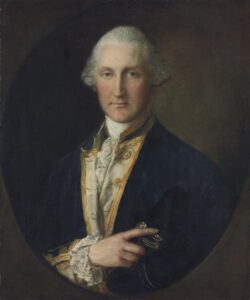
In July of 1775, one enslaved witness alleged that Thomas Jeremiah had approached him on one of the wharves and informed him that “a great War [was] coming soon” and “that the war was come to help the poor Negroes.” Another enslaved witness alleged that Jeremiah had boasted of a stockpile of gunpowder and connections that could facilitate an armed insurrection timed to coincide with the British invasion of Charleston. Several whites were also accused but were soon let go. On the flimsiest of evidence, Jeremiah was thrown in the Charleston Workhouse. Lord William Campbell, the newly arrived royal governor, was convinced the allegations were false and made under coercion. When he inquired about the case and hinted at pardoning Jeremiah, he was told that he was raising “a flame that all the water in the Cooper River could not extinguish” and that they would hang Jeremiah outside Campbell’s front door if he interfered. Campbell had conversations with Robert Smith, the Bishop of St. Philip’s Anglican Church. Despite Smith’s patriotic sympathies, the rector visited Jeremiah in prison and became convinced that Jerry was an innocent man falsely accused, moved by Jeremiah’s calm demeanor and Christian profession. The Loyalist Robert Cooper of St. Michael’s Church was also persuaded of Jerry’s innocence. Based on these interactions and the recantation of one of the enslaved witnesses (who was also Jerry’s brother-in-law), Campbell initiated an exchange of letters with Henry Laurens, the wealthy Charleston merchant and one of South Carolina’s most prominent patriot leaders. Laurens told Campbell that Jerry was guilty and “a forward fellow, puffed up by prosperity and ambition.” Campbell pleaded passionately for Jerry’s exoneration. On August 11, 1775, Jeremiah was tried under the Negro Act of 1740 and found guilty, even though the law was never intended to apply to free Blacks. Campbell petitioned the judges to reconsider their ruling and issued a last-minute pardon.
Despite Smith and Campbell’s best efforts, Jeremiah’s fate was sealed. On August 18, 1775, Jeremiah was hanged on the workhouse green. Reportedly, he proclaimed his innocence and told the crowd that “God’s judgement [sic] would one day overtake them for shedding his innocent blood.” The rain reportedly subsided just long enough for Jerry’s body to be burned as a public spectacle.
Notwithstanding the claims of some authors, there is simply not enough evidence to state definitively whether Jerry was innocent or guilty. A largely overlooked document suggests that Jerry may have conspired to set Charleston on fire with one “Bishop, a Dutchman” upon the arrival of British forces. Historians will likely never know the full truth due to the dearth of evidence. Yet the event is of the utmost significance as it illustrates the complexity of the American Revolution in the Lower South, where the struggle for Independence was akin to a multi-pronged civil war. In this crisis of allegiance, some supported King George III, while others believed liberty could only be obtained beyond the sphere of British imperial control.
When Britain did invade Charleston Harbor on June 28, 1776, the Royal Navy relied heavily upon the Black boatmen of South Carolina to navigate the bar. The “crime” that Thomas Jeremiah had been executed for ten months earlier was attempted by a skilled boatman named Sampson. Interestingly, it was the actions of these pilots (namely their apparent insubordination, defection, or error) that led to Britain’s shocking defeat.
This August 18th, as we mark the 250th anniversary of the death of Thomas Jeremiah, it is important to remember that truth, however disagreeable the subject, is sometimes stranger and more fascinating than fiction.
_________________________________
William R. Ryan has a PhD in American history from Duke University and is the author of The World of Thomas Jeremiah: Charles Town on the Eve of the American Revolution (Oxford University Press, 2010), available in both hardcover and paperback from Amazon and Barnes & Noble.